
Charlie Helps FRSA's Blog
"Global advisers on leadership and governance for three decades"Purposeful Leadership | Strategy | Governance | Quality | Value | Sustainability

Healthcare AI Regulatory Alert: ICO Clarifies Foundation-Model Requirements
The ICO has set out how existing UK GDPR duties apply to foundation models. For NHS boards the question is not whether the law changed. It did not. The question is whether each board can show, through its system of internal control, that its organisation knows what it is doing with personal data in AI.

Numbers Matter. Words Matter. People Are Neither.
When records, scores and classifications acquire more authority than the reality they describe.
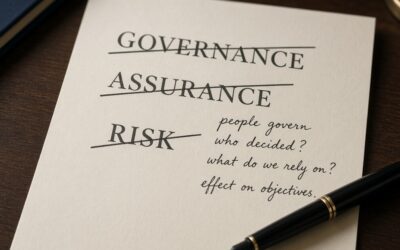
Words Matter: Governance, Assurance and Risk
When words cease to distinguish, they begin to conceal. Governance, assurance and risk are legitimate words whose careless use can obscure agency, evidence, uncertainty and judgement in the boardroom.

Succeed with Strategies for Value Creation and Preservation
A practical guide for business owners, start-ups and social value enterprises on building resilient business models, adaptive structures, digital capability, sustainable supply chains and cultures of continuous innovation in a volatile, uncertain, complex and ambiguous world.

Non-executive Director Independence – NHS Foundation Trust Boards
Overview of Relevant Governance Codes NHS Foundation Trusts (FTs) operate within a framework that blends public sector accountability with corporate governance principles, ensuring transparency, risk management, and effective oversight. The primary guidance for their...
NHS Improvement and Assessment Framework 2025-26 – Analysis and Implications
Introduction: The NHS Improvement and Assessment Framework (IAF) for 2025/26 is set to replace the current NHS Oversight Framework, reflecting a new operating model for the NHS. It is being introduced in the context of significant pressures (elective backlogs, urgent...
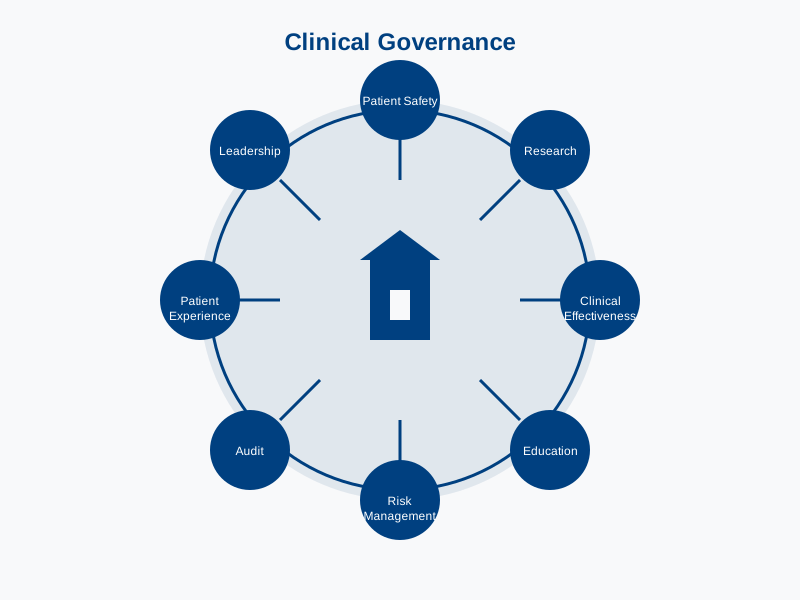
From Crisis to Transformation – The 25-Year Journey of NHS Patient Safety
From the ashes of the Bristol scandal, Clinical Governance has risen to become a transformative force in the NHS. It’s a testament to the NHS’s capacity for learning, adaptation, and unwavering commitment to improving care. It is the bedrock of NHS Quality Management, Healthcare Regulation, and Patient Safety.
As the NHS faces the complexities of the 21st century, a robust and evolving Clinical Governance system isn’t just important – it’s essential. By embracing its principles, nurturing a culture of quality and safety, and relentlessly adapting to new challenges and opportunities, we can ensure the NHS not only endures but thrives, delivering safe, effective, and truly patient-centered care for generations to come. The story of Clinical Governance is a story of ongoing evolution, a gripping narrative of learning from the past, and a powerful commitment to a future where quality and safety are not just aspirations, but the very essence of the NHS promise.
Words of Assurance – Taking it on Trust in the 21st Century NHS Boardroom
How do NHS Boards get their assurance? The transformation from "internal control" to "Board Assurance Framework" (BAF) represents a significant shift in both terminology and practice that has had far-reaching implications for NHS governance. In this brief article,...

Global Trends in AI Governance and Regulation
Global Trends in AI Governance and RegulationAs we venture into 2024, the realm of Artificial Intelligence (AI) governance is witnessing a kaleidoscope of transformative developments worldwide. This dynamic landscape is marked by a confluence of regional initiatives,...

Sustainability and Governance – the Global Challenge
The Future of Planet Earth in 2024 and Beyond The most basic question is not what is best, but who shall decide what is best? - Thomas SowellAs we enter 2024 with some trepidation, Planet Earth appears to be facing an increasing number of existential threats on so...

Thoughts on Artificial Intelligence and Corporate Governance: 3/3
Artificial Intelligence and Corporate Governance Artificial Intelligence presents both risk and opportunity in the Boardroom. How will your Board harness the opportunities while treating the risk?The future of corporate governance is poised to be shaped by a...

Artificial Intelligence vs Governance: 2/3
Artificial Intelligence vs Governance Artificial Intelligence presents both risk and opportunity in the Boardroom. How will your Board harness the opportunities while treating the risk?The future of corporate governance is poised to be shaped by a constellation of...

AI and the Future of Corporate Governance: 1/3
AI and the Future of Corporate Governance Technological advancements and growing societal expectations are driving a continuous evolution in governance models. The integration of Artificial Intelligence, for example, poses new ethical and governance challenges that...

Impacts, Outcomes, and Integration in the Corporate World
Join us for the 8th Good Governance Academy Colloquium with Professor Mervyn King to hear from the global experts on Impacts, Outcomes, and Integration in the Corporate World.
Integrated Thinking for Value Creation and Preservation
Charlie Helps Associates is pleased to host Value Preservation and Corporate Defense Author Sean Lyons as guest author introducing the Transition to Integrated Thinking in the Boardroom The Value Reporting Foundation In June 2021, the International Integrated...

A Fine Day for African Business, and Corporate Governance
Africa Day 2022 Celebrated at Launch of Transpire Global Director Network’s Africa Faculty Africa Day in the City of London A fine and ever so slightly damp London day bore witness to a joyful celebration of Africa Day right in the heart of the City of London, just a...
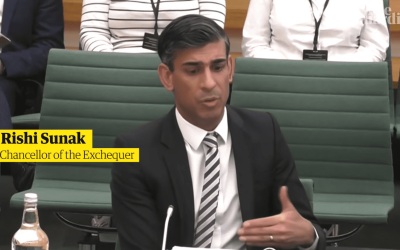
Rishi Sunak referred to the Parliamentary Standards Commissioner
Conservative Cabinet Minister, and Chancellor of the Exchequer, the Right Honourable Rishi Sunak MP refers himself to the Parliamentary Standards Commissioner over Conflict of Interest Claims What happened to Sunak? In a row about Conflicts of Interest accompanied by...
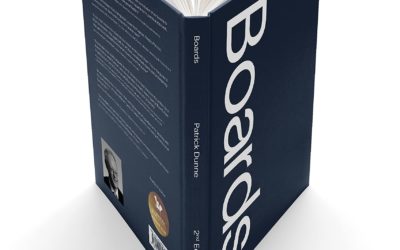
Patrick Dunne – Boards: A Practical Perspective – 2nd Edition
Patrick Dunne: Boards: A Practical Perspective - 2nd Edition We highly recommend Patrick Dunne's second edition of the award-winning book 'Boards' which a practical, realistic, thought-provoking, and useful guide to life as a board member. Patrick has written 'Boards'...

The Health and Care Bill 2021 – Swings and Roundabouts
Integrated Care System The Integrated Care System (ICS) topic has had much airtime recently, and yet, there are still no clear answers. To date, the non-statutory Sustainability and Transformation Partnerships (STPs) have had to operate on initiative and imagination...

Good Governance Breeds Great Business!
How’s your Reputation Looking?
In business, openness, transparency, and communication are the building blocks of trust.
Trust is the foundation of your reputation.
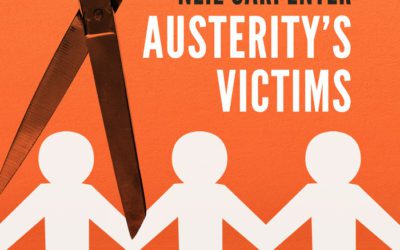
Austerity’s Victims by Neil Carpenter
Austerity’s Victims exposes the reality, describing in detail the lives of five men living in Cornwall. Their income, below the relative poverty threshold, is compared with national/county medians and the Minimum Income Standard of the Joseph Rowntree Foundation. Their quality of life, as support and benefits are cut away, is also examined and shown to fall a long way short of the wellbeing defined in the 2014 Care Act.

Seven Principles of Public Life – The Nolan Principles
The Seven Principles of Public Life outline the ethical standards that people working in the public sector are required to demonstrate The Principles were first set out in the Committee on Standards in Public Life’s first report by Lord Nolan in 1995, and they are...

Standards of Conduct in Public Office During COVID-19
The Committee on Standards in Public Life is maintaining a close watch on standards issues arising as a result of the COVID-19 pandemic.
The Chair of the Committee’s Research Advisory Board, Professor Mark Philp, discusses how the Nolan Principles can be used to help negotiate the challenges we face when making decisions during the COVID-19 crisis.
Is Corporate Governance in Troubled Waters?
We believe “governance” begins with people, and their choices, and their decisions, and their voices. We will work with you to bring your governance to life and to give you a fighting chance of avoiding national disasters like we are seeing played out at Carillion PLC.

Could Corruption Drive a Reformation?
Could Corruption Drive a Reformation
Outrage at corruption drove the reformation 500 years ago, could similar outrage drive a modern economic reformation?

Time to Think™
The quality of everything we do depends on the quality of the thinking we do first. The quality of our thinking depends on the way we treat each other while we are thinking.
Using our Transforming Meetings Programme™ clients save as much as 1/3 of time spent in meetings, enhancing clarity of purpose and thought, and optimising decision-making.

8 Ways to Inspire a Remote or Virtual Team
Leading a team who do not share the same physical space with you can be tough. How do you impart values, standards, and behaviours to people who are on the other side of the world?

7 Keys to a Successful Board
These 7 critical factors make or break the success of any board of directors or top team. How many do you get right?

Uber stripped of London taxi licence
Transport for London rejected Uber's license application According to a brief article in the Guardian today, Transport for London said it rejected Uber's application because their approach and conduct show "a lack of corporate responsibility. Uber said it will appeal...

You can rewild your garden into a miniature rainforest
You can rewild your garden into a miniature rainforest.

Meet Noreena Hertz – One of the most Iconoclastic Women Leaders of our Time
NOREENA HERTZ is a decision-making guru, bestselling author and strategist who advises some of the world’s top CEOs and Presidents on economic, geopolitical and business decisions. She graduated from university at the age of 19. By the age of 23 she was advising the Russian government on its economic reforms.
Creating Sustainable Companies Summit – Corporate Governance for a Changing World
Live streaming of this event is now offline as the event is finished. However, you can catch up on the proceedings in my Twitter Moment here: Corporate Governance for a Changing World Read the Corporate Governance for a Changing World on CharlieHelps.co Report...
Guest Author Robert Purse on Corporate Culture
Robert Purse is a Guest Author on Charlie Helps Assocyiates Blog, and Business Mentor at Virgin Start Up. Robert is an accomplished businessman with considerable experience under his belt. He's also 66 years of age, and 6"6' tall, so we thought it was a good idea to...